

 0
0
 0
0
A combination of hard work, along with faith, family and friends, have transformed 51-year-old Dr James McLure’s life after seven-and-a-half long years of suffering in silence without a diagnosis for schizophrenia.
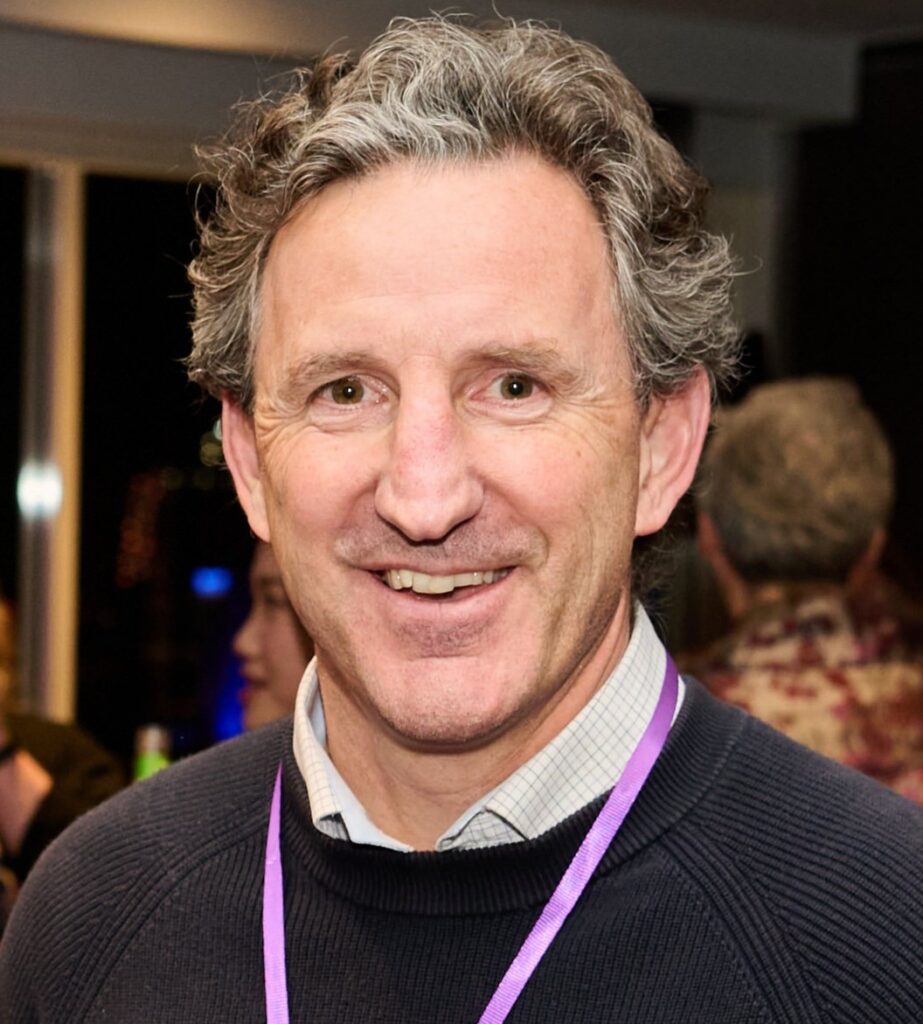
By Jacquelene Pearson
Australia doesn’t have an official data source to track the number of people who are living with schizophrenia. The best estimate is at least 100,000 people with the condition or one in one hundred.
Schizophrenia is a complex, debilitating, and severe mental health condition that affects how a person thinks, feels, and behaves.
It is categorised as a psychotic disorder and, at times, people with the illness may lose touch with reality.
It is not, as is a common misconception, the same as having a “split personality” (dissociative identity disorder).
Because the brain functions differently in people with schizophrenia, it can impact an individual’s ability to navigate daily life, maintain relationships, and function at work or school.
However, the good news is that many people live happy, healthy lives, transforming daily through the condition.
Dr James McLure was 26 years old when his journey with schizophrenia started.
“I declined for 7 ½ years until I was 33 and then came into the mental health ward here in Geelong (Victoria),” James told The Point in a candid interview to mark Schizophrenia Awareness Week (18–24 May). He now leads a team of peer workers at Barwon Health in Geelong.
“My mental health declined and I was starting to think feelings in my imagination rather than reason. I was seeing life through my unborn children’s eyes. That was a hallucination I was having.
“They came to life on a spiritual plane for me as I was experiencing delusion and hallucination.
“For 7 ½ years I was basically living in a bizarre reality which was my reality and nobody else’s.”
James says he now understands that his family knew, from the beginning, that he was unwell.
He describes that realisation as “heartbreaking”.
“Now, having children of my own, I realise it must have been extremely hard for my parents knowing their child was declining,” he says. “I just lived through it, but it was harder for them. You see the impact it has had on your loved ones when you get to the other side.”
The breaking point for James came at age 33: “I just had the most terrible psychosis. I just said to my dad, ‘Dad I need help’ and he took me into the public mental health facility at the Swanston Centre in Geelong.
“I went on medication. I started eating and drinking again. I hadn’t been eating or drinking much at all. I was about 25 kilos underweight. I was just skin and bone.
“I was incapable of loving. I was just a shell of a person really. It must have been so sad for my family.”
Symptoms and experiences
Those diagnosed with schizophrenia and their loved ones will be familiar with James’ description of the illness. Symptoms fall into three groups:
- Experiences that can occur when a person loses touch with reality.
- Hallucinations: experiencing things that others do not, most commonly hearing voices, but sometimes seeing, feeling, tasting, or smelling things that are not there.
- Delusions: strong, fixed false beliefs that are held despite evidence to the contrary like believing you’re being watched, followed, or that you have special powers.
- Disorganised thinking: difficulty organising thoughts or connecting them logically, which often results in incoherent or difficult to follow speech.
- The loss of abilities or functions.
- Emotional withdrawal: appearing emotionally “flat,” lacking facial expressions, or speaking in a monotone voice.
- Apathy: a profound lack of motivation, interest in life, or the inability to initiate and sustain planned activities.
- Social withdrawal: withdrawing from family and friends or losing interest in social interactions.
- Cognitive symptoms involve difficulties with executive functions, which can make it hard to focus, remember information, or make decisions.
“I declined for 7 ½ years, then I hit rock bottom and since that I have been improving and working towards regaining my mental health for 20 years,” James recalls of his journey to live well after his diagnosis.
“I feel like schizophrenia has transformed me into a better person than I have ever been before. I worked extremely hard. I reconnected with my faith, family and friends and it has transformed me into a warm, empathetic and understanding man.
“I no longer drink, smoke, or do any drugs,” he says. James played in the SANFL while at university in South Australia and says drinking alcohol was part of the “footy culture”.
“It was part of the culture to have a drink after the game, so I probably drank quite heavily once a week and I was doing that while I was declining.
“One thing that triggered the psychosis I experienced was smoking marijuana. I didn’t smoke much at all, but I was susceptible and from that I got paranoid and that led to depression and, following that, psychosis.”
Uphill journey
James is an optimist, but he doesn’t gild the lily when it comes to describing the process of regaining control of his life and learning to live well after being acutely unwell with schizophrenia.
“I just gradually started to connect with things of substance, like eating a meal and exercising. I did have to push the boulder uphill in that early recovery stage.”
He spent two weeks in Geelong’s public mental health facility and then returned to live with his parents.
The community mental health team, through the public mental health service, provided initial support to James and his family.
“They supported me and educated my family about the illness, but family support was a huge factor early on and then it was connecting with GROW because I had people who understood my challenges.
“I connected with peer support through GROW, which is a mental health movement, and I became a leader at GROW.
“It was the offer of friendship that helped me, which doesn’t sound very amazing. Having someone offer friendship and being a friend to others was quite profound at that stage of my journey and was a big part of my healing.
“Medicine gives distance from the illness, but relationships are the modality to the actual healing process.”
Open for all
James explains that GROW originated in Sydney in 1957,and was formed by people who were looking to maintain their mental health after serious illness.
“They went to AA (Alcoholics Anonymous) meetings and found the truth of the meeting’s healing and decided to build something specifically for mental health.
“They started developing the program and the movement has been alive for 69 years; lifting people out of despair and sharing the lived experience wisdom that has been learnt over the years.
“It has so much wisdom, insights and attitudes needed to regain your mental health. One of the founding members was a Catholic priest and some of the members say he should be made a Saint.
“You can go there at any time. No referrals needed. They are in most or all capital cities in Australia. You can find them at grow.org.au and they are international too.”
James also returned to Catholicism during his recovery years and has a resounding faith.
“I was raised Catholic, fell away from it in my 20s and then reconnected with Jesus after being unwell and early in my recovery.
“I see that the reason why I didn’t harm myself is He was there with me all the time helping me through all the rubbish that was going through my mind at the time.
“He is in us and we are in him and he has been an integral part as I continue to grow and heal; connecting with Jesus in a relationship.
Giving back through science
“I went back to Adelaide and completed my doctorate in pharmacology and then came back to Geelong,” James explains.
Thirteen years after completing his doctorate James returned to work in scientific research.
“I am researching medication for use by psychiatrists in the treatment of schizophrenia working in a multi-disciplinary research platform called SYNDICAT.
“I am one of 16 people spread across Australia, and we’ve got one of our colleagues in Denmark, all working together to first discover, and then develop new medicines.
“I love it because I can mold part of my training in pharmacology, which took 11-12 years to do, and also use my lived experience to engage people in the community to work on protocols and other parts of the research process.”
The project seeks the input of people with lived experience via Deakin University but James explains there are quite a few universities involved in the project.
“I recently went to Florence as part of an international science conference and for the Lancet Commission on schizophrenia and psychotic disorders kick-off meeting. The more I connect with God the more he opens up opportunities and connections and my world gets bigger.”
Family treasures
“I have a fiancé and two boys and my mum and dad and brothers and sisters,” he says of his family life.
James’ parents were strong and steady throughout his journey.
“My dad was amazing. He just had this unwavering belief that I could get better. In the early days I would say, ‘I can’t do this,’ and he would just say, ‘Nope you’ll be right’. The relationship never fractured.
“And I can say that for my whole family. They continued to support me and they were the only ones who were there when I was on the ward at the hospital.
“My children are 18 and 19, they are my stepchildren. I have been in their life for 10 years.
“I’ve had little setbacks but overall I am on a gradual incline. I feel like I am back living like an ordinary person growing each day.”
Beating stigma
According to Dr James McLure, society has reached a tipping point where there are now more positive stories being told about schizophrenia than negative stories.
“I am personally not at all affected by any stigma. Being open about my experience has opened up opportunities for me. I receive understanding from people that I speak to; more people are trying to understand the story of growth and healing that can happen after having schizophrenia.
“Those that matter don’t mind and those who mind don’t matter. Surround yourself with people who are going to love you. That is your tribe. The other part to the stigma is you grow and heal and that is one way to combat any stigma, to get better.”
James takes medication daily for the condition which is administered via his GP.
“I just think for me my main message is schizophrenia can be, and hopefully will be, transformative. It will humble us and change us for the better and will help us connect with our best and true self.”
Beyond stigma
The impact of schizophrenia can be profound and often fluctuates in intensity but, as Dr James McLure’s story shows, there is a way forward.
During the recent Schizophrenia Awareness Week, the Mental Illness Fellowship of Australia (MIFA) invited Australians to look beyond stereotypes.
They described sSchizophrenia as “one of the most misunderstood and stigmatised mental health conditions in the country”.
“Too often, a diagnosis of a complex mental health condition becomes the only thing the world sees, and for most Australians, that is not the full story.”
MIFA Board Chair Rob Ramjan AM said awareness without reform falls short.
“Understanding without action is not enough. We know what people need – accessible, coordinated support that enables them to live well in their communities.”
MIFA wants systems held to account and better services and opportunities delivered to those living with the condition.
MIFA CEO James Maskey said public understanding has not kept pace with the reality of living with schizophrenia.
“Stigma is not a peripheral concern. It sits at the heart of why people don’t get help sooner.
“Lived experience isn’t a footnote in this conversation. It is the foundation. When we listen to people like James, we don’t just understand schizophrenia better. We understand what the journey can actually look like.
“We need to move beyond fear and misinformation and start listening to the voices of people with lived experience.
“When people feel safe to seek support, stay connected to their communities, and access the care they need, better outcomes become possible,” Mr Maskey said.
Dr James McLure has spent years transforming his own experience into something that sustains others. But the road here was long.
“I thought I was a bad person because I had such a nasty illness,” he said. “But over time, I’ve realised that the illness isn’t at all my identity, and my identity is a peaceful one, and a loving one.”
James, now years into his own journey, is working, contributing, and living a life that once felt out of reach. To anyone who recognises something of themselves in his story, he offers this:
“Be open and share your experiences. It’s not something to be ashamed of. It’s an illness, like any other. But I believe that even in difficult experiences, something meaningful can grow. Don’t lose hope. Keep going. Life can get better.”
MIFA is encouraging Australians to look past the label, seek out the human story, and help build a community where people living with schizophrenia are known for who they are, not reduced to what they have been through.
To find out more, or to download free campaign resources to share across your networks, visit https://mifa.org.au/schizophrenia-awareness-week/
If you or someone you know is struggling, help is available. In Australia, you can reach out to organizations like SANE Australia (1800 18 7263) or the Mental Health Line (1800 011 511 in NSW) for guidance and support.
And you can connect with GROW Australia at https://grow.org.au/


