

 0
0
 0
0
An RMIT innovation uses ultrasound to extract leaf protein from discarded cauliflower leaves, identifying a potential new use for vegetable scraps.
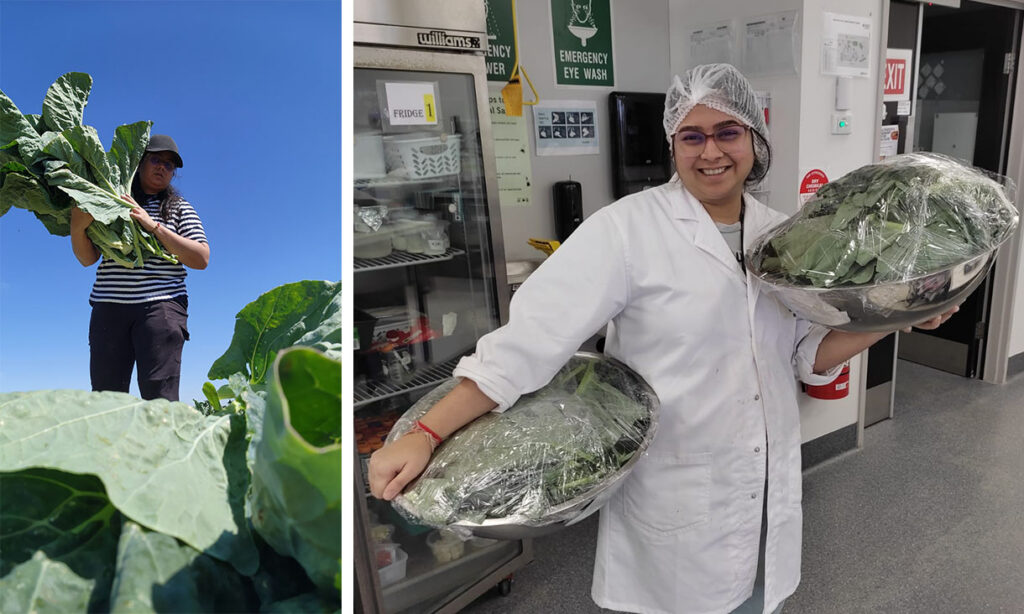
From RMIT University
The process could help food manufacturers turn vegetable waste into protein ingredients, reducing waste and adding value to existing crops.
The early-stage research found that high-power ultrasound increased dry matter yield and improved protein recovery from the leaves, while different processing settings changed the final concentrate’s particle size, colour, solubility and structure.
Cauliflower leaves are abundant but often discarded during processing, despite containing protein and dietary fibre. The resulting leaf protein concentrate could have future food and animal feed applications.
Lead researcher Professor Asgar Farahnaky from RMIT’s School of Science said the team used cauliflower leaves from a commercial farm in western Melbourne to test different ways of processing the waste to see how much protein they could recover.
They found that ultrasound improved protein recovery from the leaves.
“Ultrasound uses high-frequency sound waves to disrupt plant cell walls and help release protein from the leaves,” Farahnaky said.
“There is growing interest in alternative protein sources, and using existing waste streams could be a practical way to meet that demand without requiring additional production.”
He said further work was needed to test the process at pilot scale, assess energy efficiency and evaluate sensory acceptability in food products.
Study lead author and RMIT PhD candidate Kinjal Furia said the research was about adding value to what was already in the system.
“If we can use food waste streams more effectively, we can reduce environmental impacts while responding to growing interest in alternative protein sources,” Furia said.
The researchers acknowledge support from Harvest Moon, which supplied the cauliflower leaves, and The Leaf Protein Co., which provided in-kind contribution to the project.
Organisations interested in partnering with RMIT researchers can contact research.partnerships@rmit.edu.au.
‘Sustainable leaf protein concentrate from cauliflower leaves via ultrasonication-assisted extraction and sieve filtration’ by Kinjal A. Furia, Peter J. Torley, Mahsa Majzoobi and Asgar Farahnaky, is published in Food and Bioprocess Technology (DOI: 10.1007/s11947-026-04225-0).