

 0
0
 0
0
Tanya Mottl of FutuResilience Events has a vision for how communities can be more self-sufficient when it comes to their food supply. She shared her passion with The Point this week.
By Jacquelene Pearson
Resilience’ has become the catchword of the 2020s. As governments and corporations grapple with achieving net zero while society keeps extracting, exporting and combusting fossil fuels, citizens are increasingly told we have to be ‘disaster ready’, ‘prepared’ for flood, fire, pandemic – we have to learn ‘resilience’.
When it comes to food, most of us put our faith in one of two major supermarket brands – Coles or Woolworths – to ensure our refrigerators and pantries are well stocked.
Of course, there are some reputable smaller brands – Aldi, IGA, etc – but most of us subscribe to the supermarket oligopoly to keep our bellies full.
What happens if supply chains are broken?
Mottl says we need to be prepared and the best way to do that is to think and act at the village level.
Mottl, who is also an active member of the global Ecovillage or conscious communities movement, says being prepared for road, rail and air disruptions due to extreme weather events is something everyone should be thinking about, particularly as we stand on the precipice of an extreme El Niño this southern summer.
During the past 12 months, Mottl and others have been mapping the food resilience of the NSW Central Coast – the region tucked between the nation’s two biggest cities – Sydney and Newcastle; the region often bypassed as we travel north or south on the M1.
The culmination of the preparation done over the past year will be a Food Resilience Lab on World Food Day, Friday, October 16.
Minds and mouths
Mottl’s enthusiasm for the cause of food resilience is contagious.
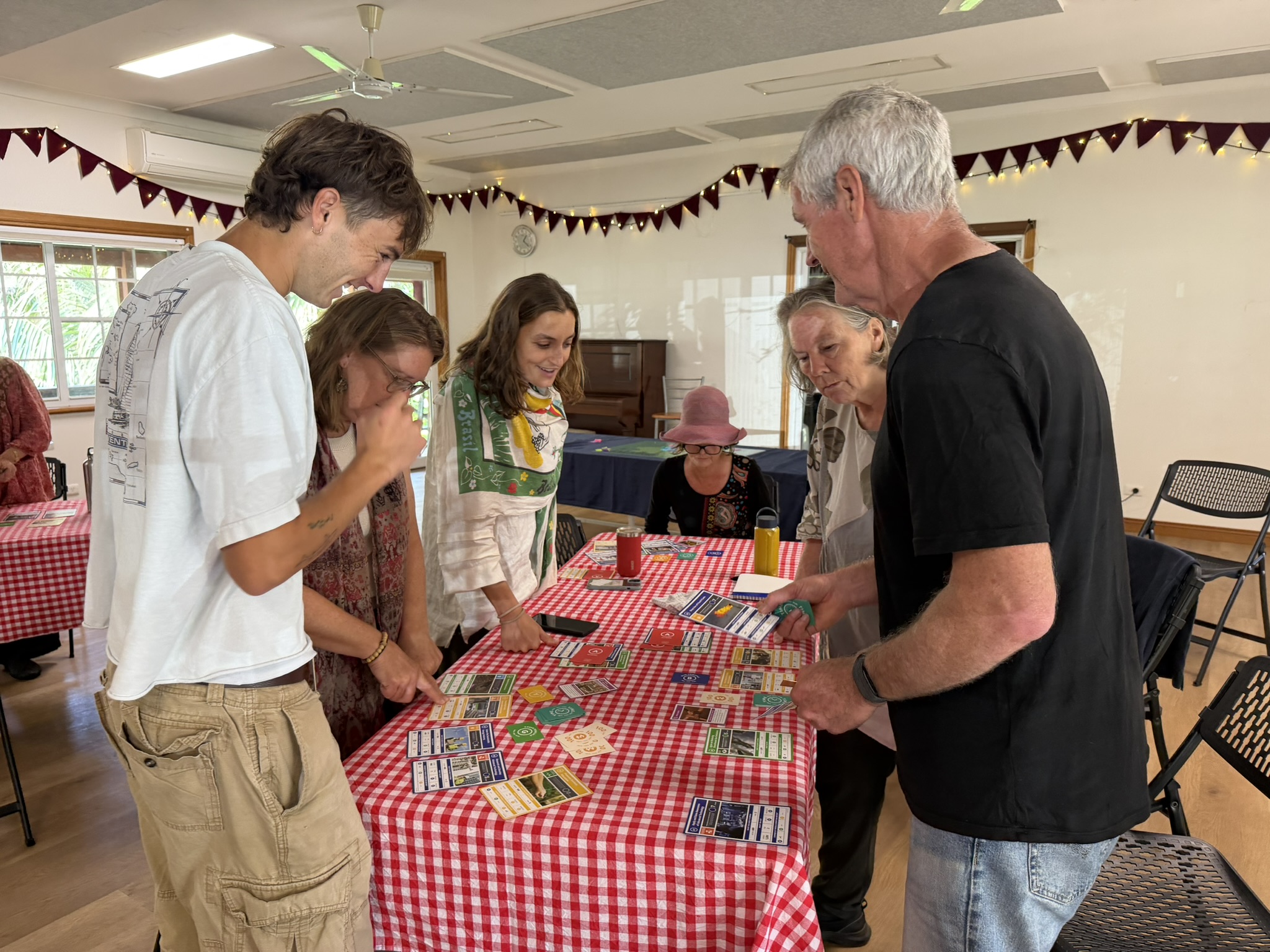
Her goal is to bring the food minds of the Central Coast region together for a day of networking, imagining, playing and mapping.
The concept of food resilience encompasses everything from growing your own vegetables in your back garden, composting, community gardening, permaculture, minimising the use of pesticides that bioaccumulate and stamping out waste and packaging.
There’s plenty of mind food on the menu for the resilience lab.
Who should be attending such an event?
Mottl says everyone who has an interest in food is welcome, including growers and producers, retailers, distributors, permaculture practitioners, teachers, gardeners, parents and cooks.
If you have an interest in food, Tanya Mottl says you have something to contribute.
A pilot gathering held recently at the Narara Ecovillage ended up focusing on the need for more commercial-grade kitchens across the region so excess food grown locally could be conserved/preserved (pickled) and made available for sale.
That gathering also focused on the need for large-scale composting across the region and discussed the poor quality of “crisis” food and how it could be improved.
Here’s Mottl’s interview with The Point.
The QR code to book your space at the World Food Day Food Resilience Lab is at the end of the video.
We hope to see you there.


