
 0
0
 0
0
The final report from a Peoples’ Inquiry into campus free speech on Palestine has uncovered widespread restrictions on free speech and academic freedom across Australian universities.
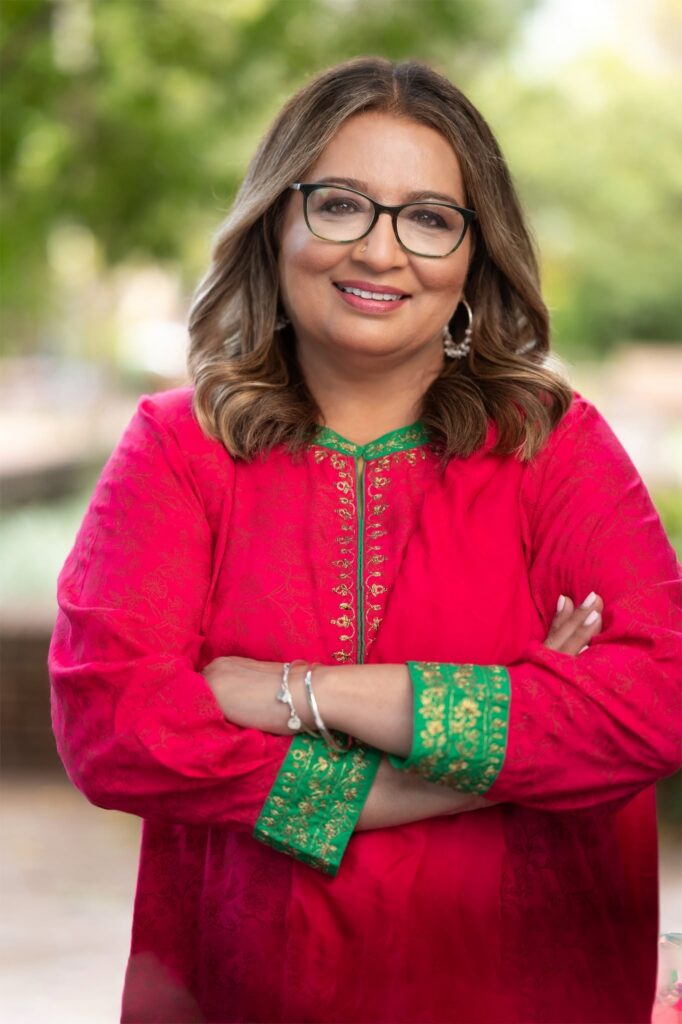
In February 2025, a coalition of students and academics, with the support of Senator Mehreen Faruqi, the Australia Palestine Advocacy Network and the National Union of Students, launched a People’s Inquiry into Campus Free Speech on Palestine.
The Inquiry was formed in response to students and staff at universities across the country being silenced for speaking up for Palestine.
A Preliminary Report was released in June 2025, and public hearings were held in Sydney, Melbourne, and online.
The Final Report draws on testimony from these three public hearings, as well as over 150 written submissions from more than 20 universities.
It finds that there has been widespread restriction on free speech and academic freedom across Australian universities.
University managements have used existing and newly devised policies in an opaque way to censor students and staff expressing support for Palestine.
The evidence drawn on by the Report is extensive and shows serious cases of discrimination, silencing, surveilling, and disciplining of staff and students engaged in pro-Palestine activism.
Some of the most severe instances have been directed at Arab, Muslim, and Jewish students.
Some examples include:
● A Jewish student was refused entry to a space created on campus as a safe space for Jewish students. When the university realised the student had been involved in pro-Palestine activism, the student was told that they had to be a member of the Australasian Union of Jewish Students to access the space, despite this never previously being a requirement (p88).
● A first year Palestinian student spoke publicly about atrocities being committed against civilians in Gaza, including her own family. An investigation was initiated by the university after a complaint was made that her statements were untrue. She was given just days to prove that her claims were factual, that she had not acted to create division, and to comment on the statements in relation to the university’s bullying policy. She provided a long document with evidence supporting what she had said. The university did not respond for months. When it did, it was to inform her no further action would be taken (p52).
● A general practitioner and academic was reprimanded by their university and told their comments could make students feel less safe in the classroom when they wrote a letter expressing concern about various hospital and university heads attending a conference hosting a delegation from a state being accused of genocide. The GP was called into a meeting where they were told that their letter had been sent around to various Zionist groups and told off on the basis that the comments could be damaging to the university’s reputation (p56).
● Many academics described complaints, investigations and censorship of course content, especially in courses relating to justice and ethics, human rights, international law, apartheid, imperialism, and the history and geopolitics of the Middle East. One tutor was abruptly dismissed following him showing footage of the Israeli Defence Forces in Gaza during a class on state violence (p30). Another described being called into their Dean’s office and asked to respond to complaints that they were forbidden to see or know the source of (p70).
● A student was emailed a complaint about “erecting a temporary structure on campus” for setting up a table for a bake sale to raise money for the family of a student in Gaza. This is one of countless examples of universities using bureaucratic red tape, absurd excuses, and obscure policies to hamper events relating to Palestine or Gaza. At this bake sale, university protective services took photos, approached students, and questioned if they had booked a space for the stall (a trestle table). Protective services employees then demanded that the bake sale be shut down (p21–22).
● A student was disciplined for making others feel unsafe when she criticised the behaviour of a group who shouted “racially vilifying remarks.” This shouting group included a student who attempted to hit her with a pole, spat on a Muslim student, and made Islamophobic remarks towards them. The student with the pole, and the others in the group, were never disciplined (p90).
Senator Mehreen Faruqi, Deputy Leader of the Greens and Patron of the People’s Inquiry said the inquiry was the first time that the injustices faced by university staff and students who speak up for Palestine had been heard and documented in a report.
Senator Faruqi described the findings as “chilling”.
“University campuses should be political spaces where students and staff are encouraged to speak out and stand against injustice, but instead universities have gone to extensive lengths to do the opposite and to shut down pro-Palestine activism and advocacy,” she said.
“The harsh measures to silence dissent are quite reprehensible when universities should be upholding academic freedom and free speech.
“The courage and bravery of the staff and students who have contributed to this Inquiry and who continue to speak out are a beacon of hope in these dark times.
“If the Albanese Labor government and the higher education sector care about safe and inclusive universities that are free from racism, discrimination and suppression, they must act urgently on these recommendations.”
Katie Shammas, Executive Officer the Australia Palestine Advocacy Network said that students and staff had refused to stay silent for two and a half years about the Israeli government’s genocide in Palestine.
“In response, many have faced censorship, intimidation and disciplinary action from university leadership, backed by political leaders, sections of the media and now a Royal Commission that continues to conflate advocacy for Palestinian rights with antisemitism.
“This final report of the People’s Inquiry is an important contribution at a critical moment. It is by the people, for the people, and stands firmly for free speech, justice and liberation.”
Here is a PDF of the full report:
Bart Shteinman, Executive Officer of the Jewish Council of Australia said the assault on free speech about Palestine had nothing to do with making Jews safer on campus.
“It is just the latest right-wing culture war directed at universities, their staff and students for daring to question the ideologies and policies favoured by politicians, media barons, and western-backed regimes like Israel. Increasingly, Jewish students and academics are refusing to allow their identities to be weaponised to shut down debate and marginalise Palestinians, and they are demanding that universities stop bending to the demands of the rightwing establishment and its pro-Israel bias.”
Panellist James McVicar, added: “The evidence gathered and presented by the People’s Inquiry points to systematic censorship of speech and activism in support of basic human rights for Palestinians and opposition to a widely documented genocide. People who have spoken out about the genocide have been slandered, censored, and in many cases disciplined for their principled stand. In the context of new attacks and slander against a movement for peace and justice, particularly on university campuses, this report sets the record straight.”
Gill Boehringer, panellist, said: “The Final Report of the People’s Inquiry lays bare the serious threats to the quality and reputation of Australian university education resulting from the dereliction of duty of university administrators to protect traditional norms of free speech, academic freedom and the right to organise and peacefully protest.”
Senator Mehreen Faruqi warned that the actions of university managements pose a severe threat to the overall quality and reputation of Australian higher education. She concluded that the final report stands “firmly for free speech, justice and liberation,” serving as a damning indictment of universities’ failure to uphold their stated commitments to equality.